
Why We Use Alcohol in Fine Perfumery
The word “alcohol” in fragrance often creates unnecessary concern.
In reality, alcohol is one of the most traditional and widely used bases in fine perfumery. It has been used for centuries because it remains the most effective way to carry and diffuse scent.
Without it, perfume would not behave the same way.
What Does Alcohol Actually Do in Perfume?
In perfumery, alcohol functions primarily as a carrier.
It helps disperse aromatic materials evenly across the skin and into the air, allowing the fragrance to unfold gradually over time rather than remaining dense or static.
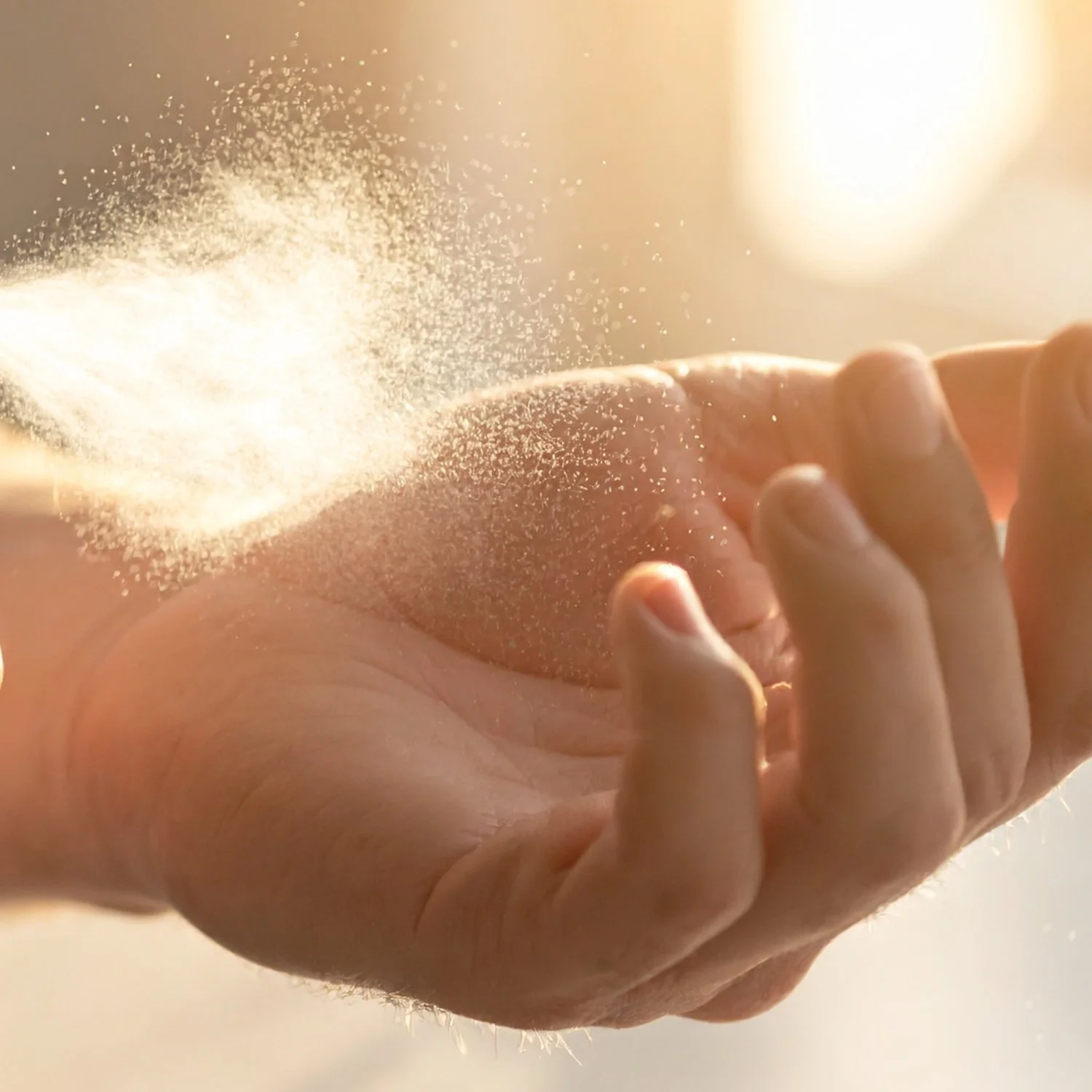
When perfume is sprayed, the alcohol evaporates quickly, typically within seconds to a minute depending on the environment and amount applied. What remains on the skin are the aromatic materials themselves.
This evaporation process is essential to how fine fragrance performs.
It allows top notes to open clearly, heart notes to evolve naturally, and deeper materials to emerge slowly over time.
Why Alcohol Is Used in Fine Fragrance
Alcohol offers several important qualities in perfumery:
It diffuses scent effectively
It creates an elegant and airy application
It helps preserve the fragrance composition
It allows the perfume to evolve in stages
It prevents the formula from feeling overly heavy or oily on the skin
This is why the majority of traditional fine perfumes use an alcohol base, including many luxury and natural fragrances.
It is not considered unusual or unsafe within perfumery when used properly.
The Misunderstanding Around “Alcohol Free”
Concerns around perfume are often directed toward alcohol itself, but in many cases what people react to are heavily fragranced formulations containing synthetic fillers, stabilisers, colourants, or overly intense aroma compositions.
Alcohol is simply the delivery system.
In well-formulated perfumery, especially when paired with carefully selected aromatic materials, it serves a functional and widely accepted purpose.
Botanical Fragrance and Alcohol
Natural perfumery presents unique challenges because botanical materials are often more delicate and variable than synthetic fragrance compounds.
Alcohol allows these materials to disperse with clarity and lightness, helping preserve the complexity and movement within the composition.
Without proper diffusion, many natural materials can feel flat, muted, or overly dense.
The role of alcohol is not to overpower the fragrance, but to support the way it breathes and evolves.
Fragrance as a Living Composition
One of the defining characteristics of fine perfumery is evolution over time.
A fragrance is not meant to smell identical from the first second to the final hour. It is designed to unfold gradually through evaporation, warmth, air, and skin chemistry.
Alcohol plays a central role in this movement.
Rather than remaining fixed on the skin, the fragrance opens, softens, deepens, and changes throughout wear.
This is part of what makes perfume feel alive.
A More Nuanced Relationship With Fragrance
Modern fragrance culture often focuses on extremes: stronger projection, longer performance, more intensity.
But traditional perfumery has always involved balance.
Projection balanced with intimacy.
Presence balanced with subtlety.
Diffusion balanced with atmosphere.
Alcohol is part of that balance.
It is not simply an ingredient within perfume. It is one of the foundations that allows fragrance to exist as an evolving sensory experience.