
Every incense stick has a story that begins with its ingredients. Understanding how it is made brings a little more meaning to the simple pleasure of lighting it.
A slender incense stick can hold an extraordinary amount of work. The choice of wood, the balance of resins, the fragrance composition and the care taken in shaping it all contribute to the atmosphere it creates. Much of that work is invisible when you look at the finished object.
When choosing incense, we often begin with its name or packaging. Perhaps we imagine a forest, a warm evening or a room filled with flowers. Those associations are part of the pleasure. But understanding what the incense is made from, and how it is made, adds another dimension to the experience.
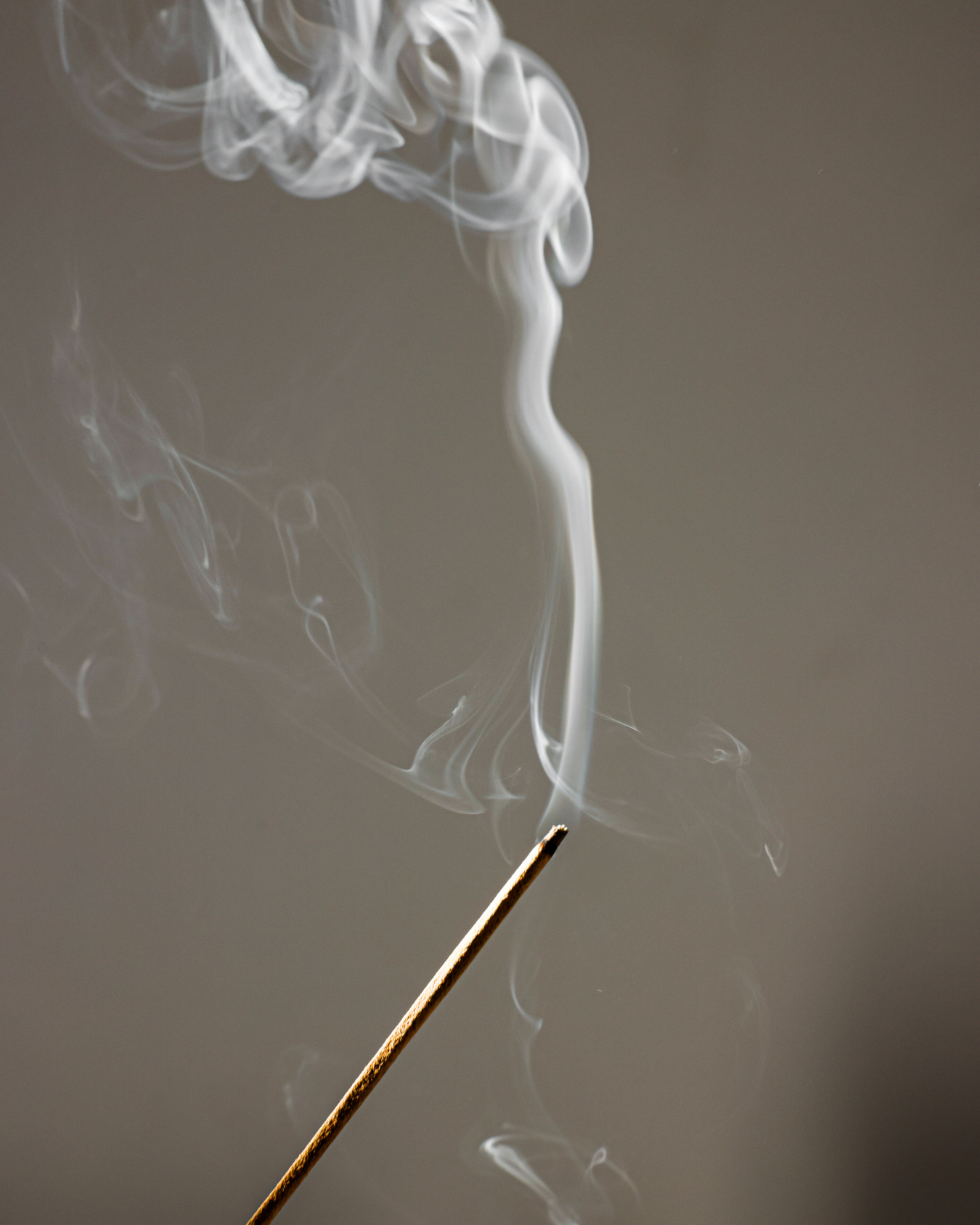
What is dipped incense?
Some incense begins as a pre-made, unscented stick or cone, known as a blank. This provides a combustible base to which fragrance is added afterwards through dipping or soaking. Blanks can contain wood powder, charcoal and a binder, sometimes formed around a slender bamboo stick. Suppliers sell these ready-made bases specifically for fragrance application.
In this construction, charcoal can act as a carrier for the added fragrance. The scenting mixture may contain essential oils, synthetic fragrance ingredients or a combination, depending on the formulation. The word “dipped” describes how fragrance is introduced; understanding the ingredients requires a little more information.
Using ready-made blanks allows a producer to create several fragrances from the same starting material. This can simplify production and help keep costs down. Much of the fragrance character is introduced during the scenting stage, rather than developed through a mixture of aromatic woods and resins.
When the ingredients form the incense
Another approach begins with aromatic materials that become the body of the incense itself. Finely ground woods, resins and botanicals are blended with a binding material, shaped and dried. Their proportions matter, as do moisture and drying time. Traditional Japanese maker Shoyeido describes this balance of ingredients and process as central to its craft.
This is the approach behind my perfume incense. At sense • studio • amsterdam, I combine woods, resins and botanical powders with my own natural perfume accords. The aromatic composition is incorporated into the mixture from which I make the sticks.
For me, the pleasure begins with choosing materials for the character they bring. A wood contributes its own scent; a resin brings another dimension. Developing the blend means finding the proportions in which those materials work beautifully together.
Joss sticks and Japanese-style incense
You may see incense sticks described as joss sticks. This is a broad term, rather than a specific name for Japanese incense without a core. To understand the construction, look for the more precise distinction between bamboo-cored and coreless incense.
In a bamboo-cored stick, a thin piece of bamboo supports an outer layer of incense material. The bamboo beneath the coating burns along with it. Part of the object’s size therefore comes from its support: a longer or larger-looking stick does not necessarily contain more aromatic material.
Coreless incense is formed so that the incense mixture supports itself. There is no central bamboo stick. This is the Japanese-style construction I choose for sense • studio: slender sticks made from the blend itself, which can also be broken into shorter pieces before lighting.
Both constructions have established traditions. A bamboo core does not automatically mean that incense is dipped or inexpensive. My preference for coreless incense comes from the way it allows me to shape the aromatic mixture into a complete object, without an additional wooden support.
The place of perfume in incense
Adding fragrance can be a deliberate part of incense composition. What matters is understanding what is added and how it belongs within the blend.
My perfume accords are made with natural aromatic materials, without synthetic fragrance compounds. I incorporate them into the botanical incense mixture to develop the character of each fragrance. This meeting of incense craftsmanship and perfumery is why I call the collection perfume incense.
The result is a way to explore fragrance through the atmosphere of a room. You might be drawn to something bright and expressive, something green and woodland-like, or the intimacy of warm woods. The composition gives that choice its personality.
Why some incense costs more
Incense prices reflect several things: raw materials, production methods, labour, packaging and brand positioning. Working with ready-made blanks can reduce some preparation, especially when one base is used across many fragrances. Preparing a botanical blend involves its own work, from balancing and mixing the ingredients to shaping and drying the sticks.
The choice and quantity of aromatic materials also affect the cost. Woods, resins and perfume ingredients vary considerably, and changing a formula changes more than its scent.
A higher price alone does not guarantee that you will love a fragrance. A useful question is whether the maker explains what gives the product its value. Clear information about ingredients and craftsmanship helps you decide what matters to you.
Look for openness, then follow your senses
When choosing incense, look for a maker who explains the materials, production method and origin. Photographs of mixing, shaping and drying can make the work tangible. Appearance alone tells you less: finely ground botanical ingredients can produce smooth sticks, while visible texture does not prove quality.
Once you have found a fragrance that interests you, begin with a short burn and notice how it feels in your space. Natural ingredients still produce smoke and airborne particles when burned, so ventilate the room and consider the people sharing it. Use a suitable holder on a heat-resistant surface, away from flammable objects, and never leave burning incense unattended.
Knowing the materials and the work behind an object can deepen the pleasure of using it. With incense, that understanding accompanies a very simple gesture: lighting a stick and taking a moment to enjoy the fragrance you have chosen.
Read more about my Japanese-style perfume incense handcrafted in Amsterdam or shop the collection in our webshop.